Author: James Kraft, Executive Director
The Dungeness is experiencing one of its worst water years on record with an extremely low snowpack in the Olympic Mountains. As a result, the Washington State Department of Ecology declared a drought emergency in the basin for the fourth year in a row. This drought is causing historically low flows in the Dungeness River.
With so little water in the river, Chinook salmon are especially vulnerable right now as they are returning to spawn. Water levels are so low in some stretches that fish are having difficulty making it upstream. Unfortunately, summer rain is unlikely to provide much relief because the basin lies in the rain shadow of the Olympic Mountains.
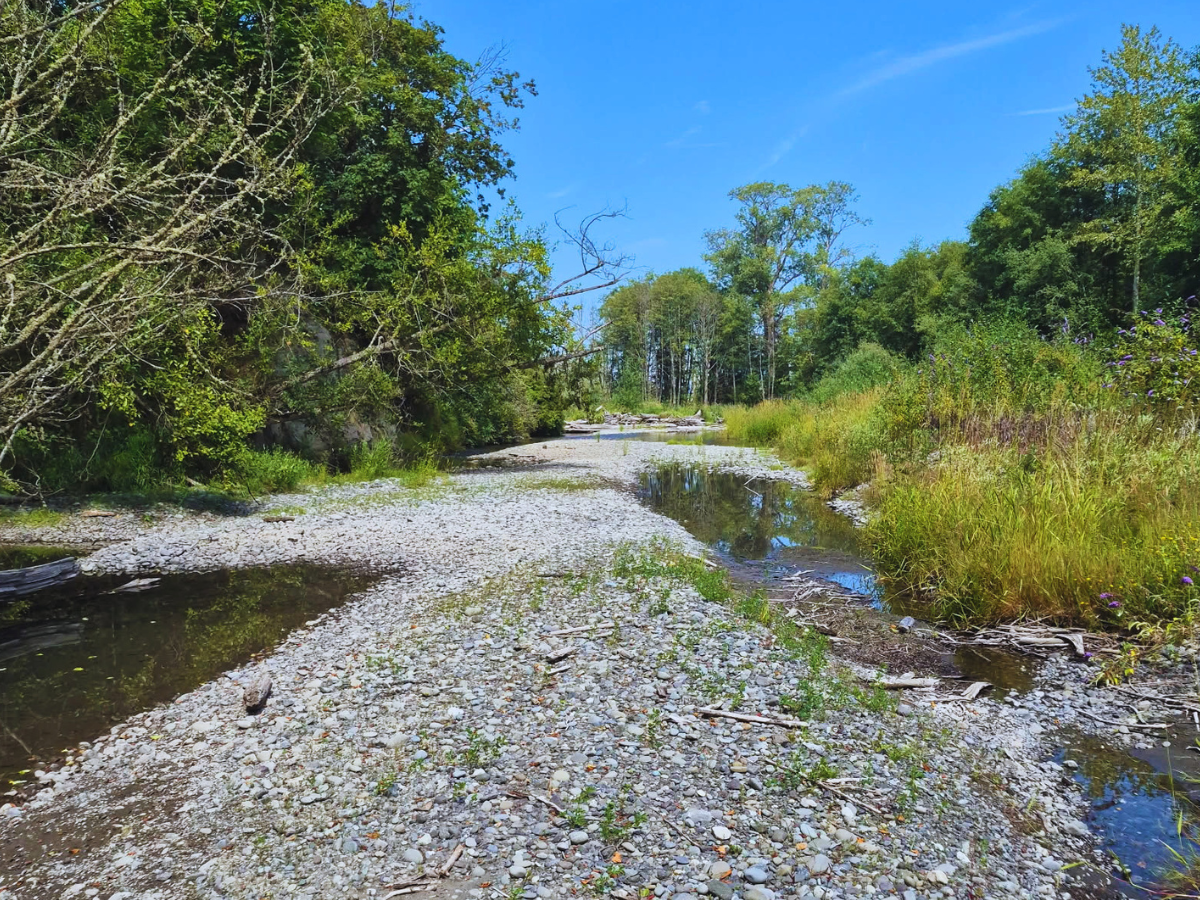
Low flows in the Dungeness have left areas of the riverbed exposed. Photo: Chris Burns, Jamestown S’Klallam Tribe
That’s where pulse flows come in. WWT has been working with irrigation districts to reduce their diversions at the same time, which causes bursts of water called pulse flows for 18–24 hours like a rainstorm. With your support, we’ve triggered pulse flows this season with farmers and the Jamestown S’Klallam Tribe.
Because farmers would otherwise grow crops with the water they’re leaving instream, WWT pays them to lease it. The Tribe provides invaluable guidance on pulse flow timing to maximize benefits to salmon. Observers suggest that the pulse flows are working; salmon were seen swimming upstream during these periods.
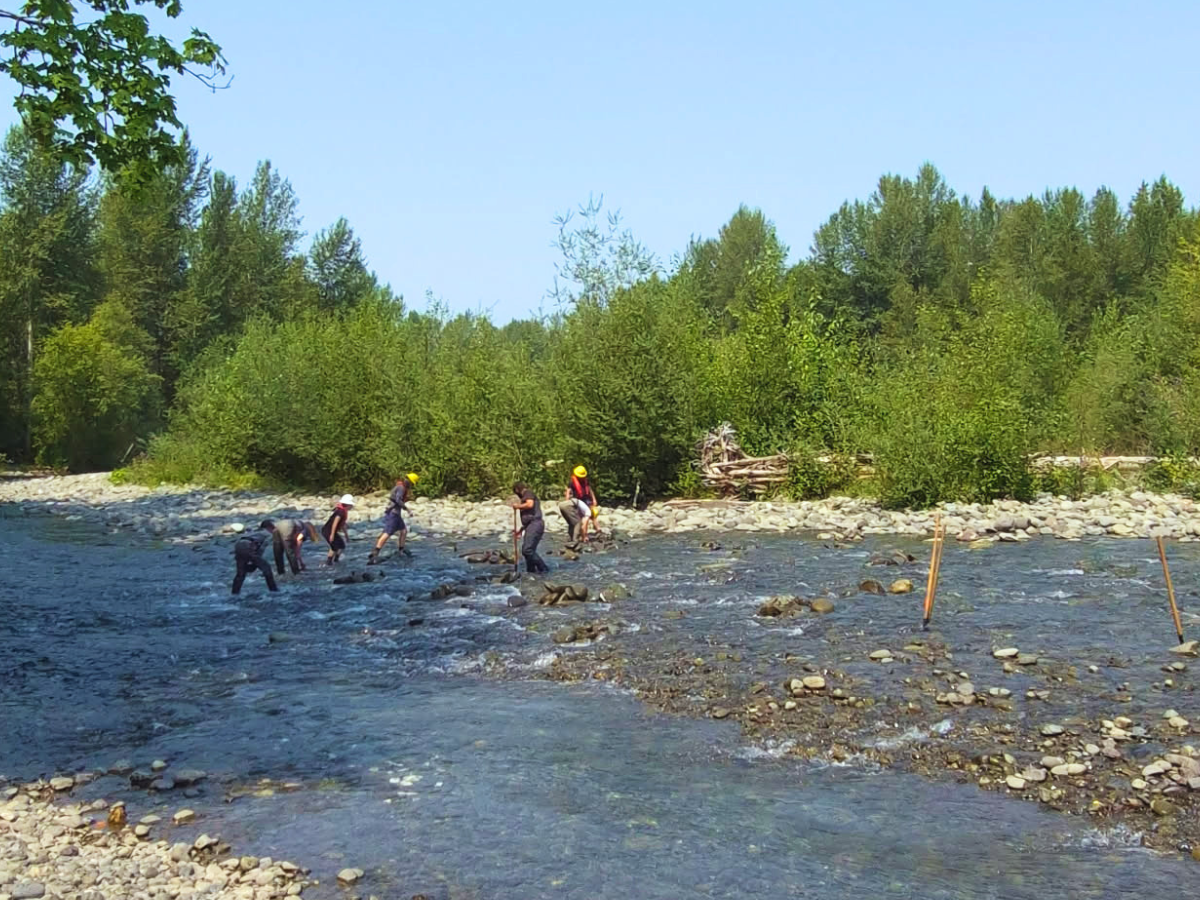
Members of the Washington Conservation Corps work to improve fish passage in the Dungeness River. Photo: Chris Burns, Jamestown S’Klallam Tribe
Pulse flows are just one part of our Dungeness drought response program. Our efforts also include dry-year leases that keep more water in the river for longer periods.
Through these voluntary agreements, WWT leases water from farmers to protect instream during August and September, when drought conditions may be at their worst. Our collaboration this year is keeping more than 1,300 acres worth of irrigation water flowing for salmon and other wildlife.
I’m proud that our team has grown the Dungeness dry-year leasing from year-to-year commitments to new five-year agreements that guarantee water for salmon. This shift will protect 1,000–1,500 acres worth of irrigation water instream over the next four summers and support pulse flows as drought conditions arise.
We’re deeply grateful to our individual donors, the Washington State Department of Ecology, business partners, and private funders who make this work possible. Thank you for helping us build sustainable water solutions with communities in the Dungeness and across Washington and Oregon.