
Author: Harlan Gough, Project Manager
I’m excited to share major progress from one of our most active basins for water conservation, the Walla Walla. The Walla Walla basin includes the confluences of the Walla Walla River, Touchet River, Mill Creek, and Dry Creek. In fact, the name “Walla Walla” is derived from the Sahaptin word Walawála meaning “many small streams.”
Its waters feed a large agricultural industry and provide the City of Walla Walla’s water, which can leave little instream. Unfortunately, Mill Creek and Walla Walla River flows can drop well below 10 cfs during the summer.
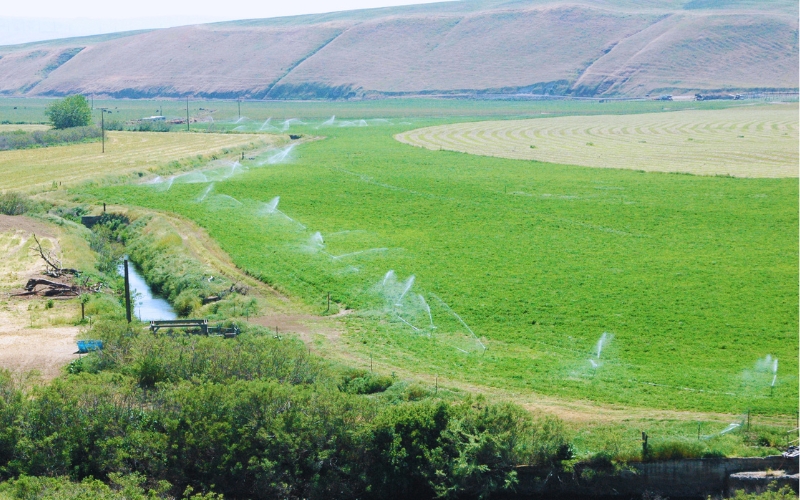
Irrigation in the Walla Walla basin
Tribal Nations, state agencies, community groups, nonprofits including WWT, and farmers came together in 2019 on the Walla Walla Water 2050 initiative to craft lasting solutions. Because the Walla Walla basin spans the Washington-Oregon state line and each state’s laws, protecting water instream is uniquely difficult.
Walla Walla Water 2050, however, facilitated the passage of new laws (Revised Code of Washington 90.90.120 and Oregon Senate Bill 761) that make cross-border flow protection possible.
WWT recently secured two major water leases that will protect up to 18 cfs in the Walla Walla this summer. The first lease is with the Walla Walla River Irrigation District (WWRID). It can partner with WWT on instream water protection for fish and other wildlife thanks to the passage of the new laws.
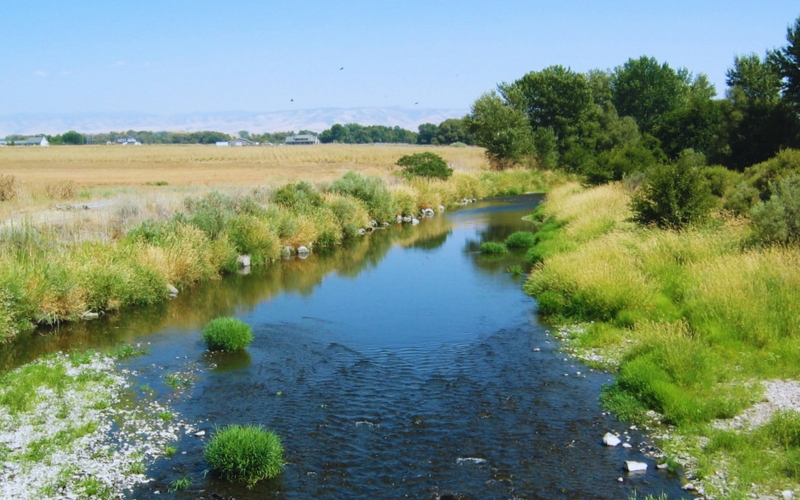
WWT will partner with the Walla Walla River Irrigation District to protect water in the Walla Walla River.
The WWT-WWRID collaboration in the Walla Walla River will protect up to 12.5 cfs, the largest volume we have restored locally through a single project. That means cool water will flow 45 miles from Oregon to the Columbia River in Washington.
The second water lease is through a continued collaboration with the City of Walla Walla around Mill Creek. The City developed an aquifer storage and recharge facility in 2021 that captures water from Mill Creek when it’s full and stores it in deep aquifers for later use.
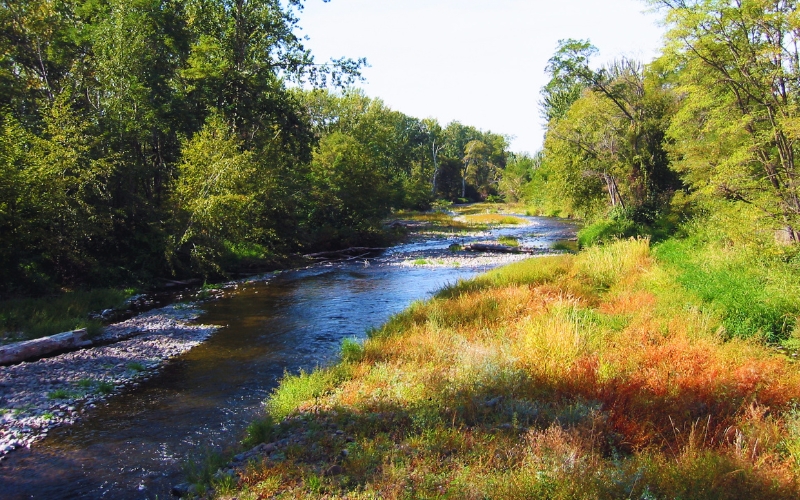
WWT and the City of Walla Walla are collaborating to keep water flowing in Mill Creek across the Washington-Oregon border.
The City will retrieve stored water this summer and partner with WWT to keep 5.5 cfs flowing in Mill Creek for 60 miles from its headwaters in Oregon to the Columbia River. These flows will benefit reintroduced Spring Chinook and Endangered Species Act-listed steelhead and bull trout.
Our new leases are just in time: the WA State Dept. of Ecology declared a drought emergency in April after weak snowfall statewide. The water that WWT and our partners are protecting will be critical to maintaining Mill Creek and Walla Walla River flows this summer. Thank you for helping us ensure Walla Walla’s many waters flow full and cool year-round!